

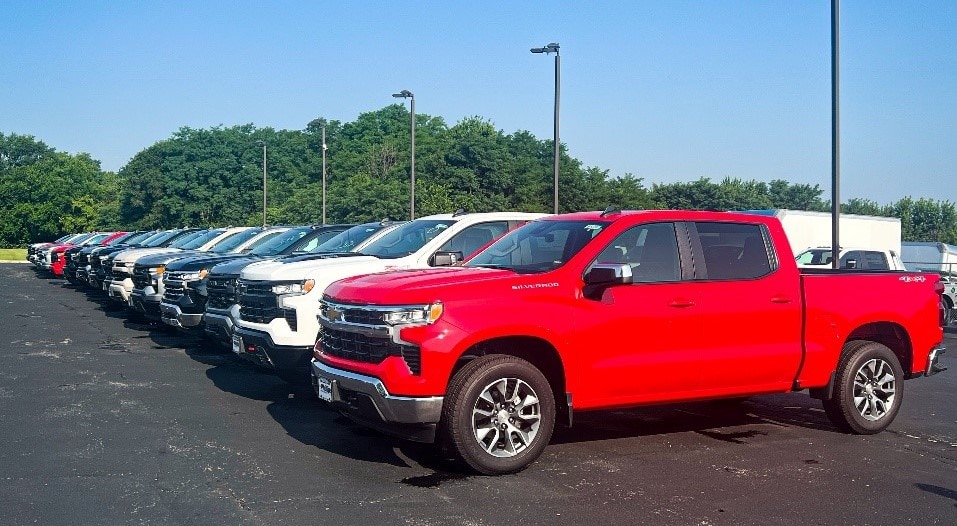
Running a business in Chicagoland means your truck works as hard as you do. Whether you’re hauling equipment down I-80, navigating tight loading docks in Orland Park, or plowing through a January whiteout on your way to a job site in Joliet, the wrong truck costs you money every single day it’s on the road. The right one pays for itself. Here’s how to figure out which Chevy commercial truck actually fits your business, not just your budget.
Start with the Job, Not the Truck
Before you look at a single spec sheet, write down what the truck actually needs to do this week, this month, and a year from now. A landscaping crew hauling mulch and mowers has completely different needs than an electrician running service calls across Tinley Park and Mokena, or a contractor towing a trailer full of lumber to a build site in New Lenox.
Ask yourself three questions. What’s the heaviest single load you’ll carry or tow? How often will you carry that load versus a lighter, everyday one? And who’s driving it, one dedicated operator or a rotating crew? Those answers narrow the field faster than any brochure.
Matching Payload and Towing to Real Work
Chevy’s commercial lineup covers a wide range, and the differences matter more than most buyers expect.
The Silverado 1500 is the workhorse for small businesses that need everyday capability without the size of a heavy-duty rig. It handles trailers, ladder racks, and daily driving around the south suburbs comfortably, and it’s easier to park and maneuver in tighter commercial lots.
The Silverado 2500HD and 3500HD step up for businesses that regularly tow heavy trailers or carry equipment that would strain a half-ton frame. If you’re pulling a car hauler, a heavy enclosed trailer, or hauling gravel and debris on a regular basis, the extra frame strength, braking capacity, and available diesel torque make a real difference over the life of the truck.
For businesses that need serious hauling without full pickup dimensions, the Chevy Express cargo van and cutaway chassis options open the door to service bodies, box trucks, and mobile workshop builds. These are common choices for HVAC companies, delivery operations, and mobile repair businesses working routes through Homewood, Matteson, and beyond.
Cab Configuration Changes More Than You’d Think
A regular cab maximizes bed length and keeps the price down, which works well for a single-driver operation focused on hauling. A double cab adds rear seating for a second worker or extra secure storage, a smart middle ground for small crews. A crew cab gives you full rear seating for a three or four-person team, useful for businesses where the truck doubles as transportation to and from job sites.
Don’t default to the biggest cab out of habit. Every extra foot of cab length is a foot you’re not using for bed length or maneuverability, and Chicagoland job sites and parking lots aren’t always generous with space.
Illinois Roads and Weather Deserve a Say in the Decision
Winters here are hard on trucks. Salted roads, sudden snow, and stop-and-go traffic on the Tri-State or I-57 all take a toll on drivetrains and undercarriages. Four-wheel drive isn’t just a nice option for businesses that operate through Illinois winters; it’s often the difference between making a job site on time and not showing up at all. Trailer sway control, available in most Silverado trims, also matters more than drivers expect once you’re towing in crosswinds on open stretches of highway.
If your business runs routes through both city driving and rural or highway stretches, look closely at gearing and axle ratio options. A truck geared for maximum towing can feel sluggish in stop-and-go traffic, while one geared for daily driving may struggle under a heavy trailer. Phillips Chevrolet’s sales team can walk you through which configuration actually matches your route, not just your load rating.
Total Cost of Ownership Beats Sticker Price
The lowest price on the lot isn’t always the lowest cost over five years. Fuel type, maintenance intervals, expected resale value, and available commercial incentives all factor into what a truck really costs your business. Diesel engines often cost more upfront but deliver better towing efficiency and longevity for high-mileage operations. Gas engines usually win for lighter-duty, stop-and-go work where diesel’s advantages don’t come into play as often.
Also ask about GM’s commercial fleet incentives and upfitting partnerships. Many Illinois small businesses qualify for programs that reduce the total cost of a properly equipped work truck, savings that don’t show up until someone asks about them.
Ready to Find Your Business’s Next Truck?
The right commercial truck should make your business more efficient, not just look good on the lot. Stop by Phillips Chevrolet and talk to a team that understands what Chicagoland businesses actually need from a work truck, then drive home in one that’s built for the job.
When you visit Phillips Chevrolet, with locations in Frankfort, Lansing, and Bradley, you’re visiting the best in the business. Family-owned and operated for over 50 years, we don't just sell cars; we build relationships. Our commitment to excellence has earned us the title of Cars.com 'Chevrolet Dealer of the Year, ' ranking #1 in the United States among over 3,000 Chevy dealerships, and recognition as the #1 Selling Chevy Dealer in Illinois for 20 years in a row. We are also a JD Power 'Dealer of Excellence' and proudly maintain an A+ Rating with the Better Business Bureau. With Illinois’ largest Chevrolet inventory and a team dedicated to award-winning service, we’re ready to help you find your next dream car.
FAQ: Choosing a Chevy Commercial Truck
Q: What’s the best Chevy truck for a small business just getting started?
A: The Silverado 1500 is the most common starting point. It balances payload, towing, and daily drivability without the size or cost of a heavy-duty truck, making it a practical fit while a business is still growing its equipment needs.
Q: Do I need four-wheel drive for a work truck in Illinois?
A: For most businesses operating through Illinois winters, yes. Four-wheel drive improves traction on snow and ice and helps keep jobs on schedule when weather turns, which happens often enough in Chicagoland to matter.
Q: Is diesel or gas better for a commercial truck?
A: It depends on use. Diesel suits high-mileage, heavy-towing operations best, while gas engines are usually more cost-effective for lighter loads and frequent stop-and-go driving.
Q: Can Phillips Chevrolet help with upfitting or fleet needs?
A: Yes. Phillips Chevrolet works with local businesses on both individual commercial truck purchases and fleet needs, including guidance on incentives and configurations suited to specific work.