

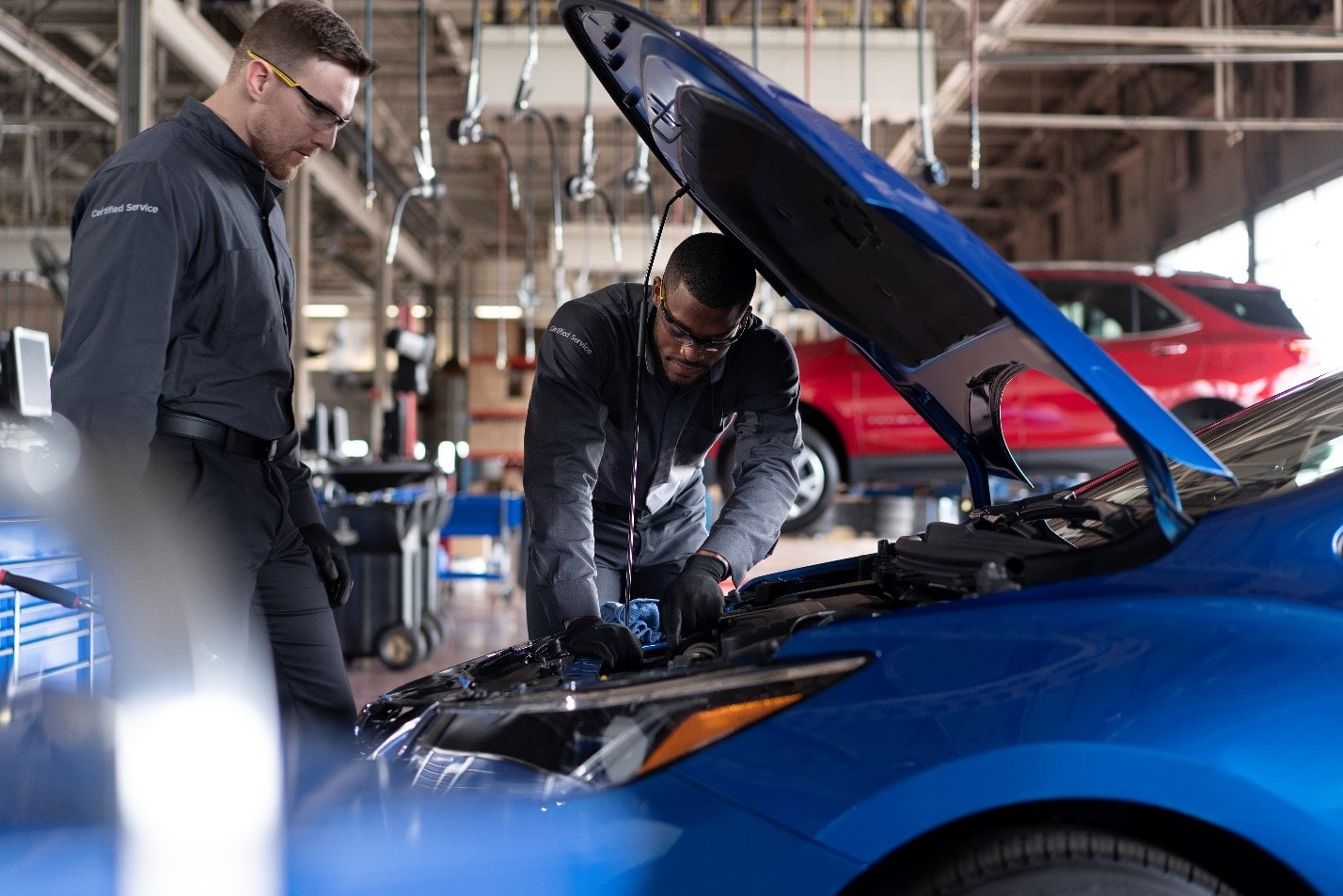
Most people pick a dealership the day they buy a car and never think about it again. That’s backwards. The dealership that sells you the Silverado or Equinox isn’t automatically the one that should be changing its oil five years from now, and in a region with Chicagoland’s stop-and-go tollways, brutal winters, and salted roads, where you service your Chevy matters just as much as which Chevy you drive.
Why “Convenient” and “Reliable” Aren’t the Same Thing
A lot of drivers in Orland Park, Tinley Park, and Mokena default to whichever shop is closest. That’s fine for a quick oil change. It’s a liability for anything involving warranty work, recalls, or a transmission that’s throwing intermittent codes. Independent shops can be excellent for basic maintenance, but they don’t have access to GM’s technical service bulletins, factory diagnostic software, or the specific torque and calibration specs that change from one model year to the next. A dealership service department does, and that gap only widens as vehicles get more computerized. Today’s Silverados and Traverses are rolling networks of modules and sensors; guessing your way through a check engine light isn’t a strategy anymore.
The Technician Question Nobody Asks
Ask any shop how many ASE-certified or GM-certified technicians are on staff, and watch how they answer. A dealership built for long-term service will tell you without hesitating, because certification turnover and technician retention are things they track. High turnover means a different person touching your car every visit, none of them building familiarity with its quirks. A stable technician team, on the other hand, starts to recognize patterns specific to your vehicle. That continuity is worth more than people give it credit for, especially once a car passes the 60,000-mile mark and things start needing attention that isn’t in the maintenance manual.
Parts: OEM Versus Aftermarket Isn’t a Small Detail
This is where corners get cut without customers noticing. Aftermarket parts can look identical to OEM parts and cost less upfront, but tolerances, materials, and fitment aren’t guaranteed to match GM’s specifications. On a brake pad, that might mean faster wear. On an electrical component, it can mean a check engine light that never fully resolves. A dealership with a genuine parts department and the inventory to back it up is buying directly from GM’s supply chain. That matters even more for drivers logging serious highway miles on I-80 or the Bishop Ford, where components wear differently than they would on short suburban trips around Homewood or Matteson.
Service History Tied to Your VIN Actually Pays Off
Here’s something that doesn’t get talked about enough: a documented, dealership-tracked service history follows your vehicle and shows up when you sell or trade it in. Buyers and appraisers trust a paper trail from a certified Chevy service center more than a shoebox of receipts from three different independent shops. If you’re the kind of owner who trades in every four or five years, a consistent service record at one dealership can directly affect your vehicle’s resale value. It also means the shop already knows your car’s history when something goes wrong, instead of starting from zero every time.
Pricing Transparency Separates the Good Dealerships from the Rest
Long-term service relationships fall apart fast when pricing feels unpredictable. The dealerships worth sticking with give you a written estimate before touching the car, explain what’s required versus what’s recommended, and don’t pad invoices with vague labor descriptions. If a service advisor can’t clearly explain why a job costs what it costs, that’s worth noticing. Over years of ownership, small inconsistencies in billing add up, and drivers eventually notice which dealership actually respects their time and their wallet.
Location Matters More Than People Admit
A service center on the other side of Chicagoland sounds fine in theory, until you’re the one sitting in tollway traffic on a Tuesday morning trying to make an 8 am appointment. Long-term service only works if the location fits your actual routine, not the one you imagined when you bought the car. Drivers throughout Frankfort, Lansing, Bradley, and the surrounding south suburbs benefit from a dealership network with multiple locations, because it means a service appointment doesn’t have to compete with your commute.
What This Looks Like Over the Life of the Vehicle
Picture two identical Equinoxes bought the same week. One gets serviced at whatever shop is cheapest that particular month. The other stays with one dealership, one service history, one team that knows the car. Five years and 70,000 miles later, the difference shows up in resale value, in how few surprises the owner has dealt with, and in how quickly problems get diagnosed instead of guessed at. That’s the actual return on choosing a long-term service partner instead of chasing convenience one appointment at a time.
Ready for a Service Team That Actually Knows Your Chevy
Choosing where to service your Chevrolet is a decision that pays off, or costs you, for as long as you own the car. If you’re ready for a dealership that treats long-term service like a relationship instead of a transaction, schedule an appointment with Phillips Chevrolet today and see what consistent, certified care actually looks like.
When you visit Phillips Chevrolet, with locations in Frankfort, Lansing, and Bradley, you’re visiting the best in the business. Family-owned and operated for over 50 years, we don't just sell cars; we build relationships. Our commitment to excellence has earned us the title of Cars.com 'Chevrolet Dealer of the Year, ' ranking #1 in the United States among over 3,000 Chevy dealerships and recognition as the #1 Selling Chevy Dealer in Illinois for 20 years in a row. We are also a JD Power 'Dealer of Excellence' and proudly maintain an A+ Rating with the Better Business Bureau. With Illinois’ largest Chevrolet inventory and a team dedicated to award-winning service, we’re ready to help you find your next dream car.
FAQ: Choosing a Chevrolet Dealership for Long-Term Service
Q: How often should I service my Chevrolet?
A: Most Chevy models follow a manufacturer-recommended schedule of oil changes every 7,500 miles under normal conditions, with additional inspections at 30,000, 60,000, and 90,000-mile intervals. Illinois winters and heavy Chicagoland traffic can push some vehicles toward more frequent service, so a dealership familiar with your specific model and driving conditions will adjust that schedule accordingly.
Q: Is it more expensive to service my car at a dealership than an independent shop?
A: Dealership labor rates can run slightly higher, but the total cost of ownership often favors the dealership once you factor in OEM parts, warranty-covered repairs, recall work performed at no charge, and fewer repeat visits for misdiagnosed issues.
Q: Does servicing my Chevy at the same dealership actually affect resale value?
A: Yes. A documented, VIN-linked service history from a certified dealership is one of the first things appraisers and buyers ask about, and it typically supports a stronger trade-in or resale offer than scattered records from multiple shops.
Q: What should I look for in a dealership’s service department specifically?
A: GM-certified technicians, genuine OEM parts, transparent written estimates, a track record of low technician turnover, and a location that realistically fits your commute or routine.
Q: Can I still get factory warranty work done if I bought my car somewhere else?
A: Yes. Any GM-authorized dealership can perform warranty and recall work regardless of where the vehicle was purchased, so switching to a more convenient or reliable service center