

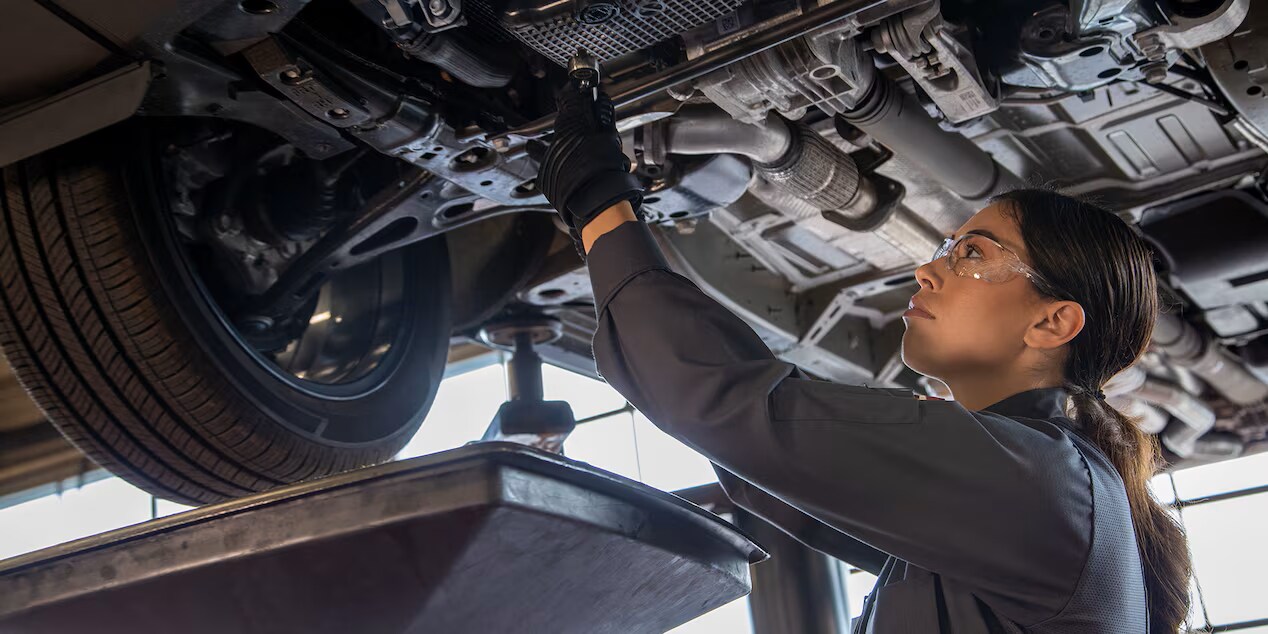
A Chevrolet oil change usually takes 30 to 45 minutes. A technician drains the old oil, replaces the oil filter, refills the engine with the oil your Chevy requires, resets your Oil Life Monitor, and inspects the fluids, tires, brakes, and belts. Here is what happens at each stage and why it matters.
The Oil Change, Step by Step
- Check-in and review. A service advisor confirms your model, mileage, and Oil Life Monitor reading, then notes any concerns, such as a new noise or a warning light.
- Lift and drain. The vehicle goes up on a lift, and the technician removes the drain plug. The used oil drains completely, which takes a few minutes.
- Filter replacement. The old filter holds contaminants the oil has collected, so it comes off, and a new one goes on. A fresh filter on top of fresh oil defeats the purpose of the whole service if skipped.
- Refill with the right oil. Modern Chevrolet engines are built around specific oil grades and GM’s dexos specification. Using the wrong viscosity can affect fuel economy and engine protection.
- Reset the monitor. Your Oil Life Monitor estimates oil condition from how you actually drive, so it must be reset after service to keep its next reminder accurate.
- Multi-point inspection. The technician checks tire condition and pressure, brake wear, belts, hoses, the air filter, and other fluids. This is often where small problems get caught before they become expensive.
Why Oil Matters More Than Most Drivers Realize
Engine oil lubricates moving parts, carries heat away, and keeps sludge from building up. As it breaks down, it protects less. Skipping changes rarely causes a dramatic failure right away. It wears an engine down quietly, and that cost shows up later.
What Chicago-Area Driving Does to Your Oil
Your driving habits matter as much as your odometer. Many people commuting from La Grange into Chicago spend their drive in stop-and-go traffic, with short trips and long idling. That is considered severe duty for an engine, because oil may never get hot enough to burn off moisture and fuel residue. Your monitor will often call for service sooner than you expect.
Winter adds to it. Cold starts on a January morning are harder on an engine than a steady summer highway run, and thicker cold oil takes longer to circulate. If your routine includes frequent short hops around Tinley Park on cold days, keeping up with service is cheap protection.
Truck Owners Have a Different Job to Do
If you drive a Silverado, you are probably asking more of your engine than a typical commuter does. Hauling a trailer, carrying a loaded bed, or working a job site raises engine temperatures and puts more stress on the oil. Owners around New Lenox who tow boats, equipment, or campers should follow the severe-duty guidance in the owner’s manual and not wait for the last mile of an interval.
Trucks also tend to hold more oil than cars, so the filter and fill matter even more. A technician who services Chevrolet trucks every day knows the right capacity, filter, and oil grade for your configuration.
How Often Should You Change Your Oil?
Start with your Oil Life Monitor and your owner’s manual. The monitor accounts for engine revolutions, temperature, and driving conditions, which is more precise than a fixed mileage sticker. As a rule, do not push past what it recommends. Change it sooner if you tow often, drive mostly short trips, or sit in heavy traffic.
Why Service It at a Chevrolet Dealership?
Chevrolet technicians work on these engines daily. They use the correct oil specification and filters, and they can check for open recalls or software updates while your vehicle is in the bay. If an inspection turns up a concern, the same team can address it with factory-trained expertise.
When you visit Phillips Chevrolet, with locations in Frankfort, Lansing, and Bradley, you’re visiting the best in the business. Family-owned and operated for over 50 years, we don't just sell cars; we build relationships. Our commitment to excellence has earned us the title of Cars.com 'Chevrolet Dealer of the Year, ' ranking #1 in the United States among over 3,000 Chevy dealerships, and recognition as the #1 Selling Chevy Dealer in Illinois for 20 years in a row. We are also a JD Power 'Dealer of Excellence' and proudly maintain an A+ Rating with the Better Business Bureau. With Illinois’ largest Chevrolet inventory and a team dedicated to award-winning service, we’re ready to help you find your next dream car.
FAQ: Chevrolet Oil Changes
Q: How long does a Chevrolet oil change take?
A: Most take about 30 to 45 minutes, depending on how busy the service department is and whether additional work is needed.
Q: Do I need synthetic oil in my Chevrolet?
A: Many modern Chevrolet engines require oil meeting GM’s dexos specification, which is typically a full synthetic blend. Check your owner’s manual for your exact requirement.
Q: Can I trust the Oil Life Monitor?
A: Yes. It tracks real driving conditions and is a more reliable guide than a fixed mileage number. Change oil sooner if you tow heavily or make mostly short trips.
Q: Will an oil change at a dealership affect my warranty?
A: Keeping up with scheduled maintenance helps protect your warranty coverage. Keep your service records either way.
Q: What else is checked during an oil change?
A: Technicians typically inspect tires, brakes, belts, hoses, the air filter, and fluid levels, then share anything that needs attention.