

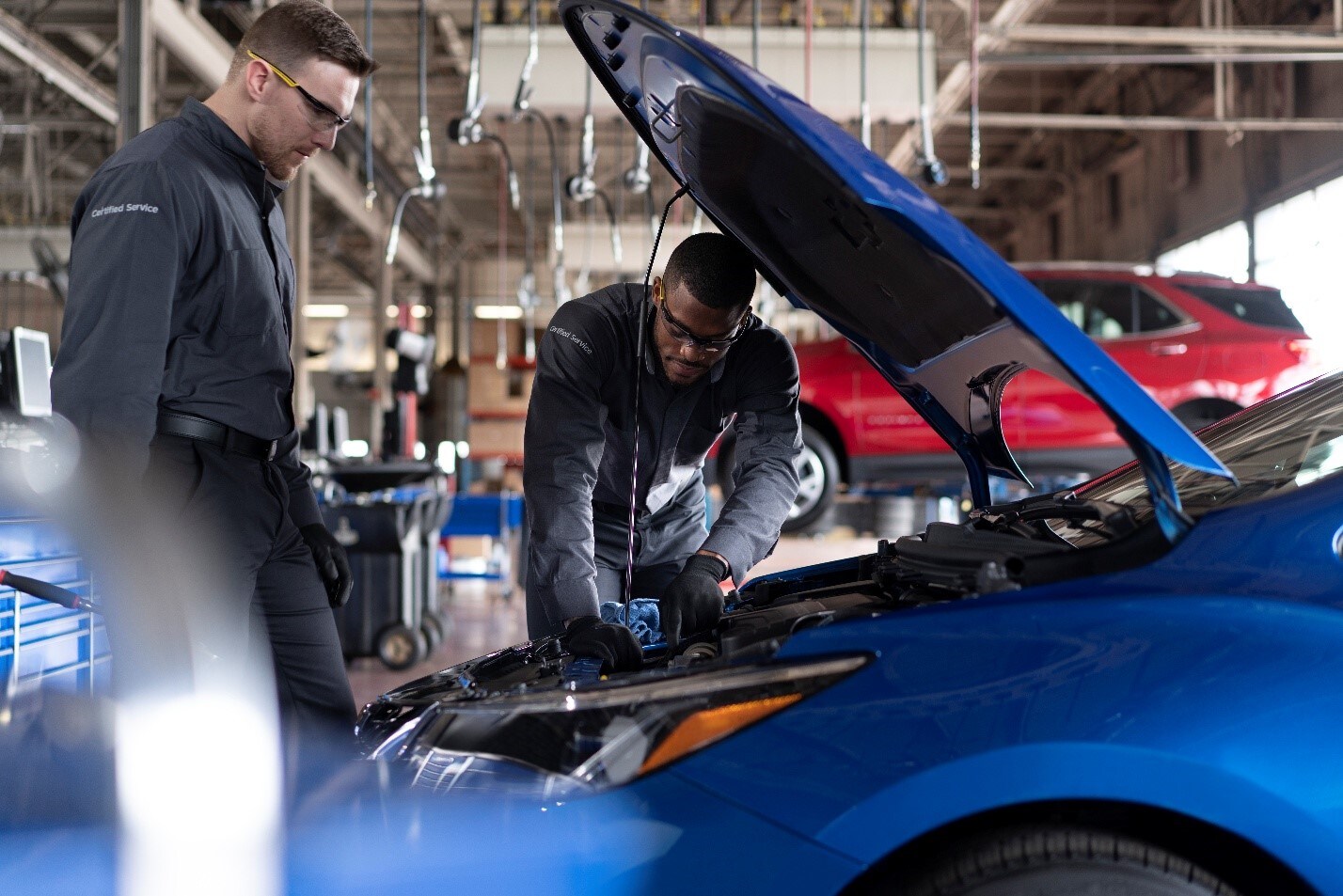
When you bring your Chevrolet in for service, a technician checks in your vehicle, listens to your concerns, inspects it, diagnoses any issues, gives you an estimate for approval, completes the repair, and quality-checks the work before you pick it up. Whether you’re in for an oil change or a stubborn warning light, most visits follow this same path. Here’s what each stage looks like, so you know what to expect.
Check-In: Tell Us What You’re Noticing
Every visit starts with a conversation. A service advisor asks what you’ve seen, heard, or felt: a vibration at highway speed, a squeal when you brake, a dash light that comes and goes. The more specific you are, the faster a technician can find the cause. Note when it happens (cold starts, towing, heavy rain) and bring up anything you’ve already tried.
Your advisor will also confirm your mileage, review your service history, and check for open recalls or upcoming maintenance.
The Multi-Point Inspection
Even a simple visit usually includes a look at the systems that wear quietly: tires, brakes, fluids, belts, battery, lights, and suspension. This matters more here than in many places. Chicagoland driving is hard on vehicles. Road salt eats at brake lines and undercarriages, winter potholes knock alignments out of true, and stop-and-go traffic on the Eisenhower or the Dan Ryan wears brake pads faster than open-road mileage ever would.
If you commute from La Grange into the city, your brakes and tires take more punishment than the odometer suggests. An inspection catches that wear before it becomes a safety issue.
Diagnosis: Finding the Real Cause
If something is wrong, a technician connects diagnostic equipment to your Chevrolet’s computer to read stored codes. A code points to a system, though, not always to a cause. A check engine light might trace to a loose gas cap or a failing sensor, and only testing tells you which.
Factory-trained technicians working on Chevrolets every day have seen these patterns before, which usually means a faster, more accurate answer and less guesswork on your bill.
The Estimate: Approval Before Work
Once the problem is identified, you should hear what’s needed, what’s urgent, and what can wait. A good advisor separates safety-critical repairs from recommended maintenance so you can make informed choices. Nothing proceeds until you approve it. If a number surprises you, ask questions. That’s a normal part of the process.
The Repair and Quality Check
With your approval, the technician completes the work using parts built to fit and perform in your Chevrolet. Afterward, the vehicle is checked again: the original concern is retested, fluids are topped off, and a final review confirms everything works as it should.
Truck owners get extra attention here. If you tow a trailer or haul a loaded bed, you already know how quickly brakes, transmission fluid, and tires wear under load. A Silverado that works hard around New Lenox job sites or on weekend trips needs service intervals that match how you actually use it, not just the generic schedule.
Pickup: A Clear Explanation
When you return, your advisor walks through what was done, what was found, and what to watch next. You should leave knowing the state of your vehicle, with any upcoming needs noted. For anyone running errands around Tinley Park or heading back out on I-80, that clarity beats a vague invoice every time.
How Often Should You Schedule Service?
Follow the maintenance schedule in your owner’s manual, and shorten the intervals if you drive in severe conditions, which Chicago winters, heavy towing, and constant short trips often qualify as. As a rule of thumb, a visit every six months helps most drivers catch small problems early, and the Oil Life Monitor in your Chevrolet will tell you when an oil change is due.
When you visit Phillips Chevrolet, with locations in Frankfort, Lansing, and Bradley, you’re visiting the best in the business. Family-owned and operated for over 50 years, we don't just sell cars; we build relationships. Our commitment to excellence has earned us the title of Cars.com 'Chevrolet Dealer of the Year, ' ranking #1 in the United States among over 3,000 Chevy dealerships, and recognition as the #1 Selling Chevy Dealer in Illinois for 20 years in a row. We are also a JD Power 'Dealer of Excellence' and proudly maintain an A+ Rating with the Better Business Bureau. With Illinois’ largest Chevrolet inventory and a team dedicated to award-winning service, we’re ready to help you find your next dream car.
FAQ: Chevrolet Service
Q: How long does a typical service visit take?
A: A routine oil change and inspection is often completed within a short visit, while diagnostics or larger repairs can take longer. Your advisor will give you a timeframe at check-in and update you if it changes.
Q: Do I need an appointment?
A: Appointments help you get seen faster and let the team prepare for your vehicle. Call ahead or schedule online, especially during the busy weeks after the first snow.
Q: Will servicing at a dealership affect my warranty?
A: Keeping up with scheduled maintenance helps protect your coverage, and dealership service records make it easy to document that work. Ask your advisor what your specific warranty covers.
Q: What should I do when my check engine light comes on?
A: If it’s steady, schedule a diagnosis soon. If it’s flashing, reduce your speed and get the vehicle checked right away, since that can signal a problem that may damage your engine.
Q: Can I approve repairs one at a time?
A: Yes. You decide what gets done, and a good advisor will explain which repairs are urgent and which can wait.