
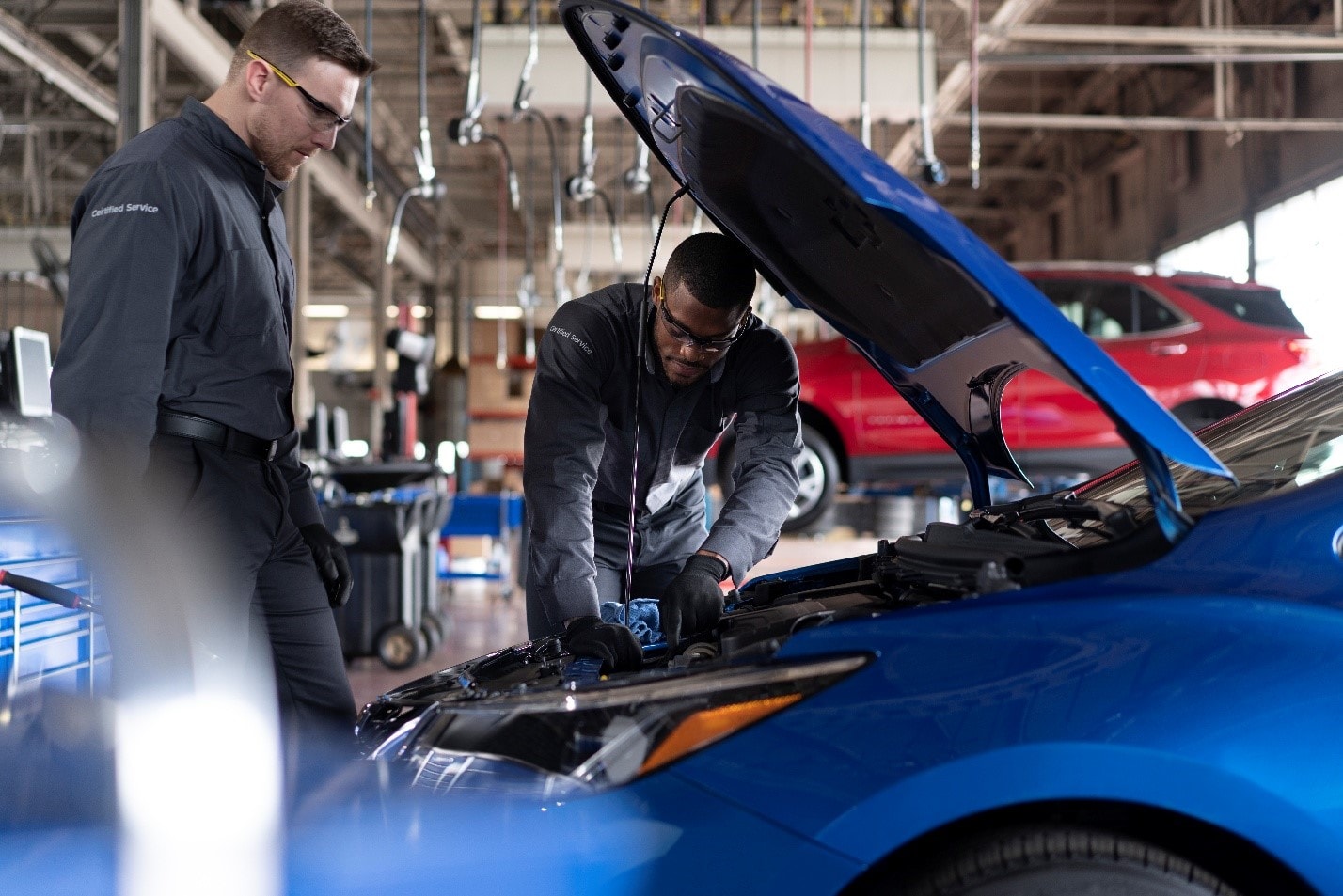
Your Silverado starts every morning. Your Equinox gets you to work without a hiccup. So why would you think about maintenance you can’t see or feel? That’s exactly the problem. The most damaging maintenance gaps aren’t the ones that make noise. They’re the quiet ones that build up mile after mile until a routine oil change turns into a much bigger repair bill.
Chicagoland driving doesn’t make this easier. Stop-and-go traffic on I-80, salt-heavy winters, and summer heat that swings 60 degrees in a season all put extra strain on parts drivers tend to forget about. Below are the maintenance items that get skipped most often, why they matter more than people think, and what happens if they keep getting pushed to “next time.”
Cabin Air Filters Get Ignored Until Someone Notices the Smell
Most drivers know their engine has an air filter. Fewer realize there’s a second filter cleaning the air that circulates through the vents. A clogged cabin air filter doesn’t just mean weaker airflow. It means pollen, exhaust particles, and road grime blowing straight into the cabin every time the AC or heater kicks on.
Chevrolet recommends replacing this filter every 12,000 to 15,000 miles, though drivers who spend a lot of time on dusty roads or in heavy traffic in Frankfort and Tinley Park may need it sooner. It’s a fast, inexpensive fix that most people only think about once the vents start smelling musty.
Brake Fluid Isn’t a “Someday” Item
Brake pads get attention because they squeal. Brake fluid gets ignored because it doesn’t announce itself at all. Over time, brake fluid absorbs moisture from the air, which lowers its boiling point and can lead to a spongy pedal feel or reduced stopping power exactly when you need it most, like sudden braking on the Bishop Ford during rush hour.
Most manufacturers recommend a brake fluid flush every two years regardless of mileage. It’s one of the few maintenance items on this list that’s time-based rather than mileage-based, which is exactly why it slips through the cracks.
Tire Rotations Get Skipped Because Tires “Seem Fine”
Uneven tire wear is one of the sneakiest maintenance issues because it develops gradually. Front tires wear differently than rear tires due to steering, weight distribution, and braking forces. Without regular rotation, that uneven wear shortens tire life and can affect handling, especially on wet or icy roads common around Lansing and Bradley in winter.
A simple rule covers most Chevy owners: rotate tires every oil change, or roughly every 5,000 to 7,500 miles. Pairing the two services means one less thing to remember and one less trip to schedule separately.
Battery Terminals Corrode Long Before a Battery Actually Dies
Batteries get replaced reactively, usually after a no-start morning in January. What most drivers miss is the corrosion buildup on battery terminals that happens well before the battery itself fails. That white or greenish buildup increases resistance in the electrical connection, which can cause starting issues, dim lighting, or accessory glitches that get blamed on the wrong part entirely.
Illinois winters are particularly hard on batteries. Cold temperatures reduce a battery’s cranking power right when the engine needs more energy to start. A quick terminal inspection during any service visit can catch corrosion before it becomes a stranded-car problem.
Wiper Blades Aren’t Just a Winter Purchase
Wiper blades degrade from UV exposure and heat just as much as from ice and snow. A blade that worked fine in April can be streaking and skipping by August, right as summer storms roll through the south suburbs. Most manufacturers suggest replacing blades every six to twelve months, not just when winter approaches.
Why These Small Items Add Up to Bigger Costs
None of these five items are expensive on their own. What’s expensive is what happens when they’re ignored together. A dirty cabin filter strains the HVAC system. Old brake fluid accelerates wear on brake components. Skipped rotations shorten tire life by thousands of miles. Corroded terminals stress the alternator. Worn wipers reduce visibility in exactly the conditions where visibility matters most.
Staying ahead of these items isn’t about perfection. It’s about building them into a maintenance rhythm that doesn’t rely on memory alone.
Let Phillips Chevrolet Keep the Small Stuff From Becoming Big Stuff
The maintenance items drivers forget are rarely dramatic, but they’re the ones that determine whether your Chevy runs smoothly for years or starts nickel-and-diming you with avoidable repairs. The team at Phillips Chevrolet checks all of it, not just the obvious stuff, every time your vehicle comes in for service.
Schedule your next service appointment at Phillips Chevrolet today and let our certified technicians handle the details so you don’t have to think about them.
When you visit Phillips Chevrolet, with locations in Frankfort, Lansing, and Bradley, you’re visiting the best in the business. Family-owned and operated for over 50 years, we don't just sell cars; we build relationships. Our commitment to excellence has earned us the title of Cars.com 'Chevrolet Dealer of the Year, ' ranking #1 in the United States among over 3,000 Chevy dealerships and recognition as the #1 Selling Chevy Dealer in Illinois for 20 years in a row. We are also a JD Power 'Dealer of Excellence' and proudly maintain an A+ Rating with the Better Business Bureau. With Illinois’ largest Chevrolet inventory and a team dedicated to award-winning service, we’re ready to help you find your next dream car.
FAQ: Common Chevrolet Maintenance Questions
Q: How often should I really get my oil changed?
A: Most modern Chevy engines use synthetic oil rated for 7,500 to 10,000 miles between changes, though the exact interval depends on the model and driving conditions. Your vehicle’s Oil Life Monitoring System is the most accurate guide.
Q: Does short, stop-and-go driving wear a car out faster?
A: Yes. Short trips and frequent stops, common in Chicagoland traffic, put more strain on brakes, batteries, and fluids than steady highway driving does. Vehicles driven this way often need more frequent inspections.
Q: Can I just wait until something feels wrong to get service?
A: You can, but it usually costs more. Items like brake fluid and cabin filters degrade silently, so waiting for a symptom often means the problem has already progressed further than a routine check would have caught.
Q: How do I know what my specific Chevy needs and when?
A: Your owner’s manual lists manufacturer-recommended intervals, but a certified technician can tailor that schedule to your actual driving habits and local conditions.