

Car shopping has a reputation problem. Ask most people what they dread about buying a new vehicle, and it’s rarely the vehicle itself. It’s the process: the back and forth over price, the sense that someone is working an angle, the feeling of being rushed toward a decision you’re not ready to make.
That reputation is earned, but it’s not universal. There’s a real difference between dealerships built around pushing a sale and dealerships built around earning your business. Knowing how to tell them apart before you ever step onto a lot can save you hours of frustration and a lot of second-guessing.
What “No-Pressure” Actually Means
The phrase gets used loosely, so it helps to define it. A genuinely low-pressure dealership shows you the price up front instead of making you negotiate for it. It doesn’t require you to talk to a manager three times before you get a straight answer. It doesn’t rely on a commission structure that rewards staff for squeezing extra dollars out of every deal.
A no-pressure dealership is one where the price you see is the price you’re offered, the sales team is paid the same regardless of what you pay, and no one is trying to rush your decision.
That last part matters more than people expect. Commission-based pay structures create an incentive, even for well-meaning salespeople, to push toward a close. Remove that incentive, and the entire conversation changes. Staff can focus on matching you with the right vehicle instead of managing you toward a signature.
The Questions That Reveal How a Dealership Operates
You don’t need to interrogate a sales team to figure out how they work. A few pointed questions early in the process tell you almost everything.
Ask how pricing is determined and whether it’s the same for every customer. Ask whether the person helping you earns commission on the sale. Ask what happens if you want to leave and think it over. The answers, and how comfortable people are giving them, say more than any advertisement.
Dealerships confident in their pricing and process answer these questions without hesitation. Dealerships that rely on negotiation tend to get vague, because vagueness is where their margin lives.
Why Illinois Buyers Have More Leverage Than They Realize
Chicagoland is saturated with dealerships. Drive from Frankfort up through Tinley Park and Orland Park, and you’ll pass more than a dozen options before you hit the city limits. That density is actually good news for buyers. It means dealerships have to compete on more than just having a vehicle in stock. They have to compete on how they treat you.
Buyers in Mokena, New Lenox, and Joliet often assume their closest dealership is their only realistic option, especially with I-80 and I-355 traffic making longer trips feel like a hassle. But a twenty-minute drive to a dealership with transparent pricing and a non-commission sales team can save thousands compared to the “convenient” option down the street. In a market this competitive, driving a little farther for a better process is almost always worth it.
Inventory Size Is a Pressure Reliever, Not Just a Perk
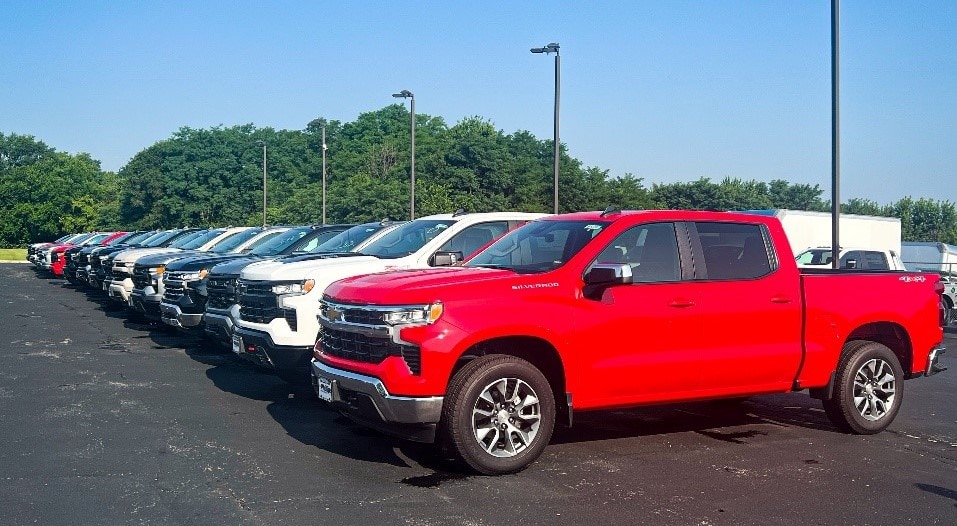
Here’s a connection people don’t often make: a dealership’s inventory size directly affects how much pressure you’ll feel. A lot with fifteen Silverados on it has every incentive to steer you toward whatever’s sitting on the lot, because that’s all they have to sell. A dealership with hundreds of vehicles across trims, colors, and configurations doesn’t need to steer you anywhere. They just need to show you what matches what you actually want.
Illinois’ largest Chevrolet inventory isn’t just a bragging point. It’s the difference between “here’s what we have” and “here’s what you asked for.”
What a Better Visit Looks Like
A low-pressure visit follows a different rhythm than the traditional car-buying script. You walk in, look at real vehicles with real pricing attached, ask questions, and get direct answers. Nobody disappears into a back office to “check with the manager.” Nobody creates urgency around a deal that supposedly expires the moment you leave.
If you’re coming from Lansing, Bradley, or Homewood and this is your first time at a particular dealership, pay attention to that rhythm during your first fifteen minutes. It tells you whether the next two hours will feel like a negotiation or a conversation.
Ready for a Different Kind of Car-Buying Experience?
If you’re tired of the traditional dealership runaround, Phillips Chevrolet was built to be the alternative. Stop by our Frankfort, Lansing, or Bradley location, browse Illinois’ largest Chevrolet inventory, and talk to a team that isn’t working an angle. Schedule your visit or start browsing online today, and see what car shopping feels like without the pressure.
When you visit Phillips Chevrolet, with locations in Frankfort, Lansing, and Bradley, you’re visiting the best in the business. Family-owned and operated for over 50 years, we don't just sell cars; we build relationships. Our commitment to excellence has earned us the title of Cars.com 'Chevrolet Dealer of the Year, ' ranking #1 in the United States among over 3,000 Chevy dealerships and recognition as the #1 Selling Chevy Dealer in Illinois for 20 years in a row. We are also a JD Power 'Dealer of Excellence' and proudly maintain an A+ Rating with the Better Business Bureau. With Illinois’ largest Chevrolet inventory and a team dedicated to award-winning service, we’re ready to help you find your next dream car.
FAQ: Finding a Low-Pressure Chevy Dealership
Q: How can I tell if a dealership uses high-pressure sales tactics before I visit?
A: Check whether their pricing is posted online and consistent, and look for mentions of a non-commission sales team. Dealerships that hide pricing until you’re in the building typically rely on negotiation-based tactics.
Q: Does a non-commission sales team actually change the experience?
A: Yes. When staff isn’t paid based on how much you spend, there’s no financial incentive to upsell or rush you, which tends to make the entire interaction more straightforward.
Q: Is it worth driving farther for a better dealership experience?
A: Often, yes. In a market as dealership-dense as Chicagoland, a slightly longer drive can mean significantly better pricing transparency and a less stressful process.
Q: Why does inventory size matter if I already know which Chevy model I want?
A: A larger inventory means more trim, color, and feature combinations available, so you’re more likely to find the exact configuration you want instead of settling for what’s on the lot.
Q: What should I ask a dealership to gauge their sales approach?
A: Ask how pricing is set, whether staff work on commission, and what happens if you want to leave and think things over. Direct, confident answers are a good sign.